
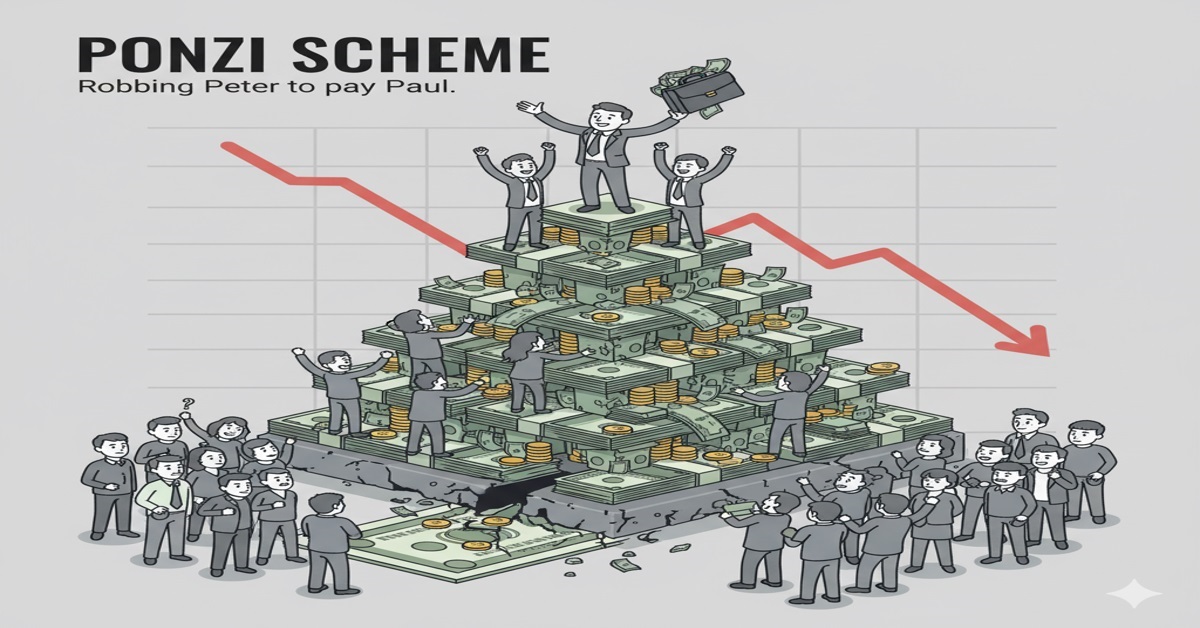
A Ponzi scam, or Ponzi scheme, is a type of financial fraud where the returns paid to earlier investors come from the money collected from new investors. It gives the false impression of a successful business or investment opportunity, but in reality, there’s no actual profit being generated.
The scam works only as long as new money keeps flowing in. Once fewer people invest, the fraudster can no longer pay existing investors, and the scheme collapses — leaving most participants with significant losses.
How Does a Ponzi Scam Work?
A Ponzi scheme typically starts with a promoter who promises high returns at little or no risk. The setup looks legitimate because the first few investors actually receive “returns.” However, those payments are made using funds from newer investors, not from real profits.
Here’s how it usually unfolds:
- Step 1: A scammer convinces people to invest by offering unusually high returns.
- Step 2: Early investors get paid from the money contributed by newer ones.
- Step 3: The scam grows as more people join, often through word of mouth.
- Step 4: When new investments slow down, the fraudster runs out of money and disappears.
This creates a financial collapse that affects hundreds or even thousands of investors.
The Origin of the Ponzi Scheme
The term “Ponzi scheme” comes from Charles Ponzi, who became infamous in the 1920s for defrauding investors through a fake postage stamp investment plan. He promised huge profits but simply used money from new investors to pay earlier ones.
Today, the same pattern continues — though instead of postage stamps, modern Ponzi scams may use cryptocurrencies, real estate, or online trading platforms as their disguise.
Why Do People Fall for Ponzi Scams?
Ponzi scams are successful because they seem legitimate and often exploit trust. Promoters use professional websites, fake documents, and positive testimonials to appear authentic.
People fall for these scams because:
- The returns sound realistic but are unusually consistent.
- The scammer appears credible or part of the community.
- Early participants share positive stories, creating social proof.
- Victims are pressured to reinvest or invite friends to “not miss out.”
How To Spot a Ponzi Scam
You can protect yourself by watching out for these warning signs:
- Unrealistic promises of high returns with low risk.
- Lack of transparency about how your money is invested.
- Difficulty withdrawing funds or excuses for payment delays.
- Pressure to reinvest instead of taking profits.
- No proper registration or financial regulation compliance.
If something sounds too good to be true, it probably is.
FAQs About Ponzi Scams
Q1. Is a Ponzi scheme illegal?
Yes. Ponzi schemes are a form of investment fraud and are punishable by law in most countries.
Q2. What differentiates a Ponzi scheme from a pyramid scheme?
A Ponzi scheme focuses on paying old investors with new investors’ money, while a pyramid scheme involves recruiting members who pay to join.
Q3. Can I get my money back if I was scammed?
Recovery is difficult once the scheme collapses. Victims should immediately report the case to financial authorities and avoid reinvesting.
Final Thoughts
A Ponzi scam may look like a golden opportunity, but it’s one of the most dangerous traps for investors. Always verify the legitimacy of any company, check if it’s regulated, and research before investing.
To stay informed and protect your finances, visit BrokersReviewer.com — a trusted source that reviews brokers, exposes online scams, and helps people make safe investment decisions.
If you believe you’ve been affected by Ponzi scam, feel free to contact us or report a scam through our platform to help others stay informed.
Stay informed. Read broker reviews, compare platforms, and always verify licensing details. For more insights, visit BrokersReviewer.com.
For more updates, follow us on:
Leave a Reply